
Clinical Laboratory Services
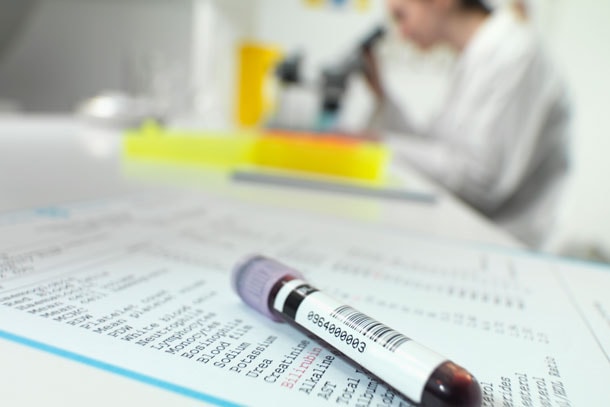
The laboratory at Northern Nevada Medical Center inpatient services are provided 24/7 and outpatient services are provided Monday to Friday from 7 a.m. to 4:30 p.m.
The laboratory stays current with the latest technology.
Services available include:
- Chemistry
- Hematology
- Coagulation
- Urinalysis
- Blood bank
- Microbiology
- Immunology and serology
- Special chemistry
The Northern Nevada Medical Center Laboratory is fully accredited and certified by the College of American Pathologists.
For more information, please call the laboratory at 775-356-4033.
Lab Team Essential to Healing
Medical laboratory professionals are interactive members of the healthcare team working alongside nurses and doctors to assure the best possible outcomes for patients.
Lab results are an important piece in the puzzle when patients are diagnosed and treated, and it's vital that laboratory technologists communicate with other staff. "If we have test results unsuitable for the patient's condition, we call the physician or nursing staff to discuss the next step," said Suzanne Norris, MT (ASCP), CLS (NCA), Quality Control/Point of Care coordinator for the Northern Nevada Medical Center Laboratory.
Norris says that in an emergency, communication is even more important. "If test results are questionable, we'll discuss further testing that can be done immediately, and we always notify physicians directly if lab results are critical," she says. "Follow-through with patient care is very important," she added.
More than 265,000 laboratory professionals and 14,500 board-certified pathologists in the U.S. make essential, if sometimes hidden, contributions to our nation's healthcare.
Since laboratory work is behind the scenes, patients and families often are unaware of the synergy between testing and treatment. "When an unconscious patient comes into the ER, our tests can diagnose whether it's a heart attack, or, in the case of diabetic shock, whether due to low or high blood sugar. Then the patient can be treated correctly within minutes," Norris said.
Hospital labs also function as on-site blood banks. Units of blood in all types are kept on hold just in case they are needed for emergency or surgery.
Cancer patients definitely are aware of the importance of lab work. Radiation and chemotherapy treatments affect the count of white cells — the infection-fighting blood cells. Hemoglobin, the red, oxygen-carrying cells, also drop in number as a result of chemotherapy treatment. Individuals undergoing cancer treatment routinely are tested to gauge how successful treatment has been and whether they need replenishment from the blood bank.
Medical technology, the piece of the medical puzzle that might appear to offer the least excitement, is to laboratory professionals a most intriguing pursuit. "I think people get into it because they like patient care and they like the analytical, scientific aspects of it," Norris said."Our goal is to get results out quickly and accurately to assist the physicians, so the patient can get out of the ER or surgery, and go home feeling better," said Norris. "That's really our bottom line."
Pathology
Northern Nevada Medical Center offers a full range of diagnostic services in anatomic pathology that includes surgical pathology, autopsy pathology, cytology, cytogenetics, flow cytometry and immunohistochemistry. The areas of surgical pathology, gastrointestinal pathology and renal pathology are among the subspecialties, both for inpatient and external consulting work. Pathologists at Northern Nevada Medical Center have been active in the diagnosis and analysis of infectious diseases.
For more information, please call the laboratory at 775-356-4033.